Packaging design
From idea to finished box.
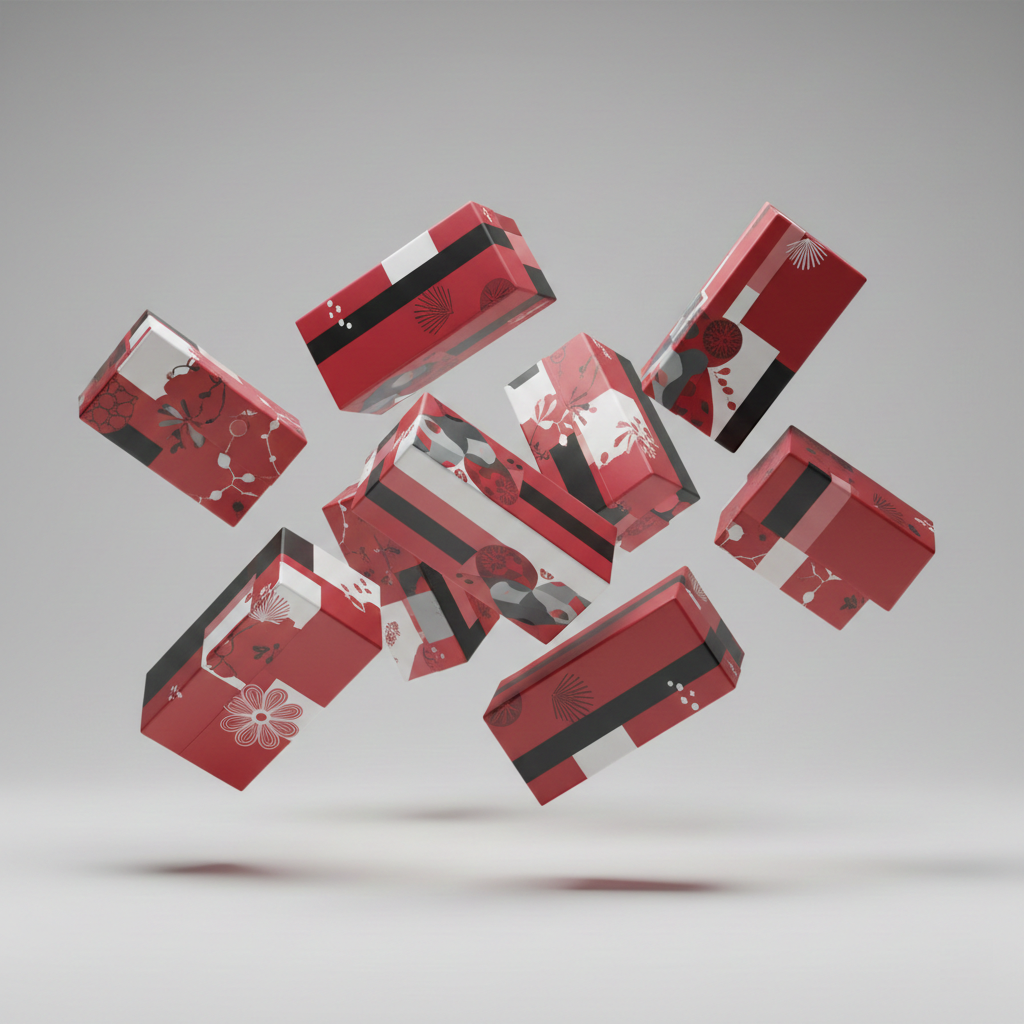
An in-house design team that works hand in hand with production. We make decisions about material, structure, and finish on day one — not after a costly hand-off. The design you sign off on is the design we can manufacture, at your budget and quantity.
Why us
Design and production in one company.
A typical agency engagement
Designs the box. Hands files to a manufacturer. Manufacturer makes substitutions because the design assumed materials or processes they don't have. Cost rises, schedule slips, the brand reads differently from the mockup.
A Jamar engagement
Design and production work as one team. Material, structure and finish are chosen with production in mind from the first sketch, so the prototype you approve is one we can make. The result: fewer revisions, fewer surprises at production, a shorter path to the shelf.
One company. One team. One point of accountability — from sketch to packed pallet.
What we design
Six places we usually start.
- 01
Product boxes
Retail-shelf packaging that has to perform under fluorescent light.
- 02
Gift and limited editions
Seasonal, anniversary, and short-run premium packaging.
- 03
Jewellery and accessories
Boxes that hold a price tag of their own.
- 04
Cutlery and premium tableware
Presentation boxes for knives, cutlery sets, serving pieces.
- 05
Electronics cases
Foam-lined, magnet-closed, branded inner packaging.
- 06
Promotional and marketing
Mailers, gift drops, sample kits, influencer packages.
Process
Six steps from brief to production.
Brief
A conversation about the brand, the product, the customer, the budget, and the quantity.
Concept
First design directions, on paper or on screen.
Iteration
You pick a direction; we refine structure and graphics.
Prototype
A real, physical prototype delivered for sign-off — not just a render.
Production files
Final print-ready files, die-lines, and material specs.
Production
The approved design goes to our own production. No hand-off to another company.
Team
Three skills working together.
Graphic design
Branding, typography, illustration, surface design.
Structural design
Die-lines, folds, rigidity, transport behaviour.
Production technology
Material selection, finish feasibility, cost control.
Graphics and die-lines are prepared in professional design software, and the design is tested as a physical prototype before production — so you approve a box you can hold, not a picture of one.
Palette
A wide palette to design within.
Solid board (250–600 g/m²), corrugated in E, B, and BC flutes, decorative papers, coloured micro-flute, foil-stamping, UV varnish, lamination, flocking, laser cut-outs, embossing, magnetic closures, ribbons, ties. If you can sketch it, we can almost certainly make it — and if we can't, we will tell you that in week one, not week eight.
Money and time
How cost and timing are set.
We quote against the actual brief, not a price list — a simpler project gets a lower figure.
FAQ
Common questions.
Can I bring my own graphics and ask you to design only the structure?
Tell us in the brief what you already have. If the graphics are done, the quote covers only the work that is left: structure, prototype and production.
How much does the design step cost?
It depends on the complexity: a folding carton with brand graphics costs less than a bespoke rigid box with custom inserts and several finishes. You get the figure in the quote, within 24 working hours of sending the brief.
Can I send a brand book or guidelines for the designers to follow?
Yes — strongly preferred. The more constraint we have, the faster we get to a usable concept.
How many revisions are included?
The quote states how many revision rounds are included, so you know before work starts.
Got an idea? Let's start with a conversation.
Bring your product, your brand context, and your rough volume. You leave with an honest sense of what's possible and what it will cost.
Or call +48 32 216 86 60 (Mon–Fri, 8:00–16:00 CET) or email contact@jamarbox.com.